The Wheels on the Bus Go School Bus
A Designer’s First Look: Friendly, Nostalgic, and Ready for Stitching
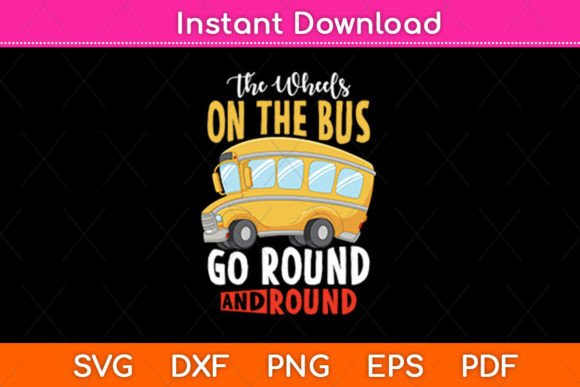
Opening The Wheels on the Bus Go School Bus for the first time, I immediately felt its warmth — not in color (since it’s a vector-based SVG), but in intention. This isn’t just another back-to-school graphic; it’s a distilled moment of childhood rhythm and routine, built around a cheerful, instantly recognizable school bus shape. As an embroidery designer who’s stitched hundreds of themed files for clients and small shops, I appreciate how cleanly the silhouette reads: rounded roof, bold windows, friendly wheels, and subtle driver detail — all arranged with balanced negative space. It leans into playful simplicity rather than overcomplication, which is exactly what makes it viable across age groups and product types.
Where It Shines: Real Projects, Real Customers
Last week, I prepped a custom embroidered tote bag for a local preschool teacher — a gift for her students’ first day. I chose The Wheels on the Bus Go School Bus as the centerpiece because it scaled beautifully to a 4” x 4.5” hoop size and held clarity even at that modest dimension. On cotton canvas, with medium-weight cutaway stabilizer and high-contrast thread (navy on cream), the design stitched out cleanly: crisp satin-stitched outlines, smooth fill-stitched body panels, and legible, rounded lettering that didn’t blur or feather. Parents loved it — not just as decoration, but as a tactile, handmade token of transition. That’s the quiet power of this file: it supports emotional resonance without demanding perfection from the stitcher.
I’ve also used it successfully on baby onesies (with tear-away + topping for softness), sweatshirt pockets (reduced density to avoid stiffness), and iron-on embroidered patches for classroom supply kits. For Etsy sellers, it’s a strong candidate for bundles — pair it with coordinating “ABC” or “My First Day” designs, and you’ve got a cohesive, seasonal collection. As a digital embroidery file, it bridges craft and commerce: simple enough for hobbyists, polished enough for boutique branding.
Where to Pause — Not Every Fabric or Format Fits
That said, The Wheels on the Bus Go School Bus isn’t universally forgiving. On highly textured fabrics like terry cloth or bouclé, the finer window details can lose definition — especially if stitch density isn’t adjusted downward. Stretchy knits need extra stabilization (a light fusible + cutaway combo works best), and dark fabrics demand careful thread selection: white or yellow satin stitch pops, but pale pastels may disappear without underlay or topping. On curved surfaces — like the front panel of a structured cap — test placement first. The bus’s horizontal orientation means it sits well on flat zones (tote fronts, pillow covers, tea towels), but wraps awkwardly on tight curves unless resized or reoriented.
Also worth noting: while the SVG format suggests versatility, remember this is primarily a cutting-machine file — not a native embroidery format like .PES or .DST. If you’re planning to digitize it yourself for machine embroidery, inspect those wheel spokes and driver window edges closely. Tiny details like those can turn into dense stitch clusters or fragile jump stitches if not optimized. Don’t assume automatic conversion will preserve clarity.
Design Notes Every Embroiderer Should Check
- Test first — always run a sample on scrap fabric matching your final project’s weight and stretch.
- Review stitch density — especially in the bus body and wheels. Overly dense fills cause puckering on lightweight cotton or baby knits.
- Confirm hoop size — the layout fits comfortably in a 5” round or 4” x 4” square hoop, but double-check before hooping expensive fabric.
- Inspect small details — the driver’s face and window lines are charming but delicate. If stitching for children’s wear, ensure they’ll hold up through washing.
- Mock it up in black and white — helps spot contrast issues before threading your machine.
- Match stabilizer to fabric — cutaway for stable wovens, tear-away + topping for knits, fusible for sheer layers.
- Verify licensing — since this is marketed as a Graphics file for Crafts, confirm whether commercial use (e.g., selling finished embroidered totes on Etsy) is permitted before listing.
Why It Builds Trust — Not Just Stitches
Customers don’t buy embroidery files — they buy confidence in outcome. When a parent orders a personalized backpack with The Wheels on the Bus Go School Bus, they’re trusting you to deliver something joyful, legible, and durable. This design delivers that quietly: no wonky proportions, no confusing layering, no hidden complexity that derails a deadline. Its visual personality — warm, inclusive, gently nostalgic — reinforces brand consistency for small shop owners building a “back-to-school” line. And because it avoids trendy clutter (no glitter effects, no excessive shadowing), it stays fresh season after season.
For craft business owners, that longevity matters. You won’t need to replace it next August. For handmade product makers, it elevates perceived value — a clean, well-executed bus says “I care about quality,” not “I grabbed the first free file I found.” Even in holiday embroidery (think: “First Day of Kindergarten” ornaments), it adapts gracefully when paired with simple script or star accents.
Final Thought: A Thoughtful Tool, Not a Magic Button
The Wheels on the Bus Go School Bus won’t stitch itself — but it doesn’t fight you, either. It respects your time, your machine, and your customer’s expectations. It’s the kind of embroidery file that earns repeat use because it behaves predictably, scales honestly, and connects emotionally. Whether you’re stitching for a client, prepping for a craft fair, or building digital design assets for your shop, treat it like a reliable collaborator: test it, tune it, trust it — then let it do what it does best: bring a little rhythm, recognition, and real-world charm to your next project.